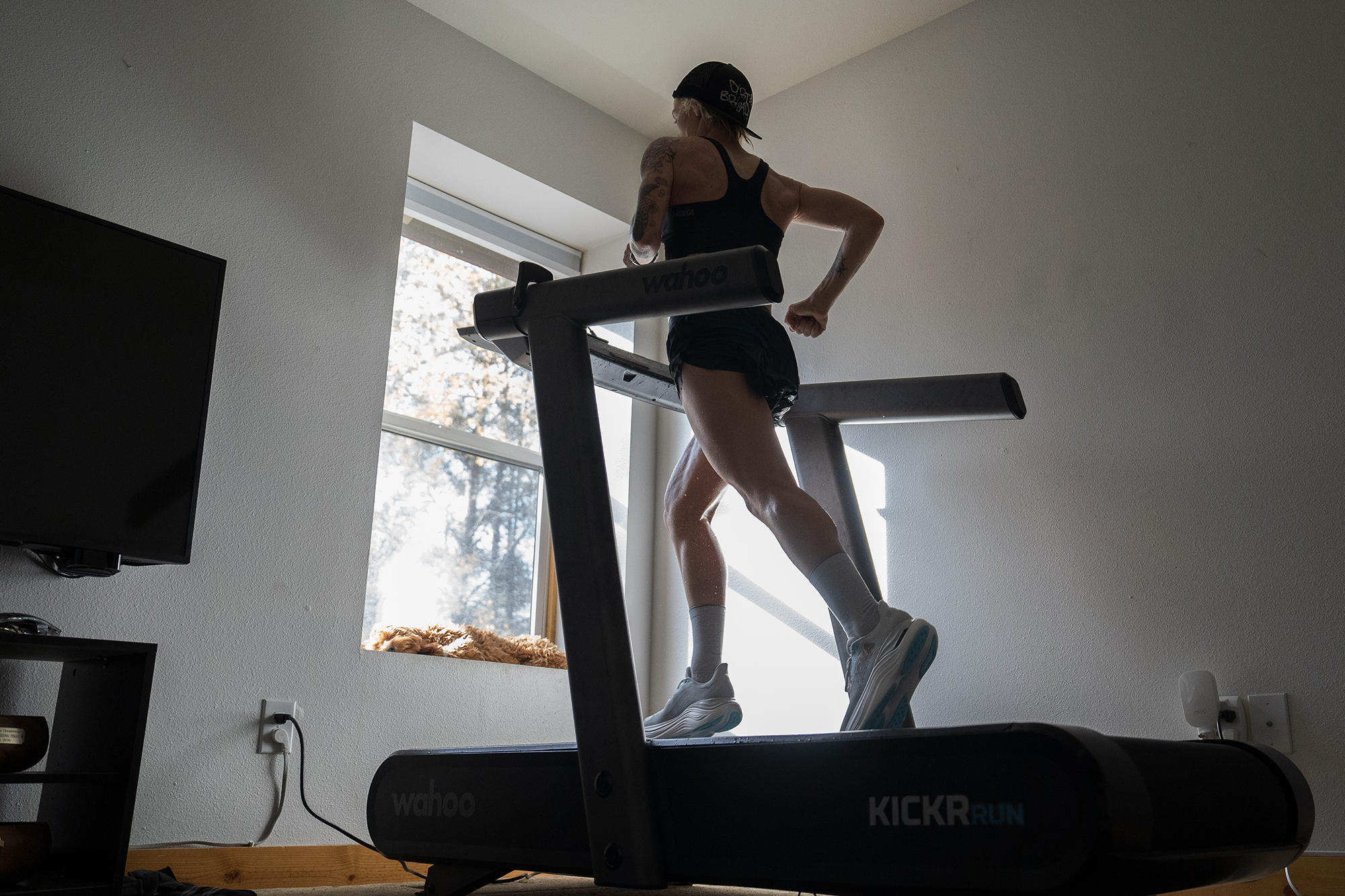
Marathon training demands consistency above almost everything else. You can have the perfect plan, the right shoes, and the motivation to match, but if the weather shuts you down, the roads are icy, or your schedule simply does not allow for an outdoor run, consistency takes the hit.
That is the case for the treadmill. Not as a compromise, but as a genuine training tool that in 2026 has become sophisticated enough to replicate outdoor conditions with a precision that would have seemed unlikely a decade ago.
This guide covers everything you need to know about training for a marathon indoors: the features that matter, the workouts that translate to race day, how to protect your form across months of high mileage, and how technology can enhance your training experience.
Key Features of Marathon Training with a Smart Treadmill
Not all treadmills are built for the demands of marathon preparation. A casual fitness treadmill and a machine capable of supporting 16 to 20 weeks of structured training are very different pieces of equipment. There are a few key features to look out for to ensure a treadmill meets the demands of long-distance training.
A powerful motor rated for continuous use is non-negotiable for extended runs at varying speeds. Belt size matters equally. You need a running surface of at least 60 inches in length to accommodate a full stride without shortening your gait or forcing compensatory movement across a long training block.
The running surface itself plays a crucial role in your training experience. Look for treadmills that offer a responsive surface without excessive bounce, mimicking the natural feel of road running. This balance is essential for developing proper form and muscle memory that translates to race day conditions.
Durability of the treadmill surface is critical for high-mileage use. Advanced shock absorption systems reduce the impact on your joints, which is vital for injury prevention during marathon prep.
These are the essential features you will want to consider:
- Incline & decline capability: 12-15% is ideal for an effective hill simulation
- Shock absorption: Reduces joint strain during long runs while maintaining road-like feel
- Deck stability: Minimal flex for consistent foot placement
- Speed range: Up to 4:00/mile for interval training
Simulating Outdoor Conditions: Why Incline and Decline Both Matter
Marathon courses are not flat. Even fast courses carry gradual undulations, bridges, and road camber that recruit different muscle groups and demand varied energy output.
The 1% rule is the starting point. Setting the incline to 1 to 2% compensates for the absence of wind resistance, making the physiological demand closer to road conditions at equivalent pace. For runners targeting hilly courses, structured incline work builds specific muscle strength and the joint mechanics that steep gradients demand.
Decline training is equally important and frequently overlooked. The quadriceps load during downhill running is significant, and arriving at a race undertrained for descending is a common source of late-race fatigue. A treadmill with genuine decline capability closes that gap.
Speed Work on a Treadmill: Structure as an Advantage
One genuine advantage of treadmill training is the precision it brings to speed work. When interval training requires you to hit a specific pace for a specific duration, the treadmill removes the guesswork. Here is how to structure the key speed sessions of a marathon build:
- Progressive tempo runs: Gradually increase speed to build endurance
- Interval training: Alternate between marathon pace and faster speeds
- Recovery periods: Maintain movement at lower speeds between intense sections
- Race pace practice: Simulate target marathon pace for extended periods
The combination of incline and speed variations prevents training plateaus and maintains engagement during long indoor sessions.
Monitoring Your Training: Data and App Integration
Running by feel has its place, but the athletes who improve most consistently are the ones who understand what their data is telling them.
Running Watches for Treadmill Training
A GPS running watch is one of the most practical tools a marathon or distance runner can pair with a smart treadmill. While GPS positioning is not active indoors, watches like the COROS PACE and COROS APEX use their onboard accelerometers to track pace, distance, cadence, and heart rate throughout your session, giving you continuous performance data without any external sensors required.
Heart rate data from your watch feeds directly into your training zones, giving you real-time visibility of whether an easy run is staying genuinely easy, whether a tempo effort is landing in the right physiological window, and whether recovery between intervals is complete before the next repetition begins.
App Integration and Structured Training
Modern smart treadmills, such as the Wahoo KICKR RUN, integrate directly with platforms like the Wahoo App and Zwift, providing structured workout delivery, metric tracking, and virtual running environments. These integrations not only give you precise control over your session, but engagement and entertainment during those long training runs.
Building a Fuller Running Profile
Data collection is only useful if it informs better decisions. The Wahoo and COROS integration demonstrates how syncing data across platforms unlocks a fuller running profile, combining treadmill session data from the KICKR RUN with wearable metrics from your COROS watch to give a more consistent data across indoor and outdoor runs. The integration brings them together into a single, coherent training history that informs smarter decisions across every week of your marathon preparation.
Rethinking How You Measure Fitness
Pace tells you how fast you are running. It does not tell you how hard your body is working to run that fast, or whether that effort is sustainable across 26.2 miles. Wahoo’s 3DP Running Athlete Profile moves beyond single-number fitness summaries to map your capacity across the full spectrum of effort, revealing whether you are built for sustained aerobic output, explosive speed, or somewhere in between. For marathon training, this changes how you set training zones, approach interval work, and pace your race.
Maintaining Proper Form on the Treadmill
The most common form issues from extended treadmill training include over-striding, reduced arm drive, looking down at the console, and a shortened stride. Focus on these fundamentals in every session:
- Forward gaze: Look ahead at a fixed point rather than down at the display
- Natural arm swing: Full range of motion with relaxed shoulders
- Mid-foot strike: Land with your foot beneath your hip rather than in front of your body
- Consistent cadence: Target 170 to 180 steps per minute throughout
- Core engagement: Maintain an upright, stable trunk, particularly as fatigue builds in longer sessions
Regular form checks in the mirror can help prevent compensatory movements that might lead to injury.
The Smart Treadmill Built for Marathon Training: Wahoo KICKR RUN
For runners who want a treadmill built from the ground up for precision training, the Wahoo KICKR RUN represents the current standard.
RunFree Mode: Natural Adaptation for Both Endurance and Speed
The KICKR RUN’s innovative RunFree Mode revolutionizes indoor training by automatically adjusting belt speed to match your natural stride patterns. This responsive technology creates a more intuitive running experience that adapts to your pace in real-time, whether you’re doing long, steady miles or explosive sprint intervals.
For marathon training, RunFree Mode allows you to naturally settle into your rhythm without constantly adjusting speed settings. The belt responds to subtle changes in your pace, making it easier to maintain proper form during long training sessions and progressive tempo runs. This natural adaptation is particularly beneficial when practicing marathon pace changes, as you can focus entirely on your running form rather than managing controls.
Where RunFree Mode truly shines is in its versatility for sprint training – a crucial component of marathon preparation that many runners overlook. During interval sessions, the belt instantly responds to your acceleration, allowing for explosive starts and natural speed transitions that closely mirror outdoor sprinting. This responsiveness is essential for:
- Fartlek training: Seamlessly alternate between different speeds based purely on your body’s movement
- Sprint intervals: Accelerate naturally without button pressing, maintaining proper form during high-intensity bursts
- Recovery periods: Gradually ease back to slower speeds without abrupt transitions
The technology’s ability to match your natural acceleration and deceleration patterns also reduces the risk of injury during high-intensity training, as you’re not forced to match pre-set speeds that might not align with your body’s natural rhythm.
Incline and Decline Capabilities
The treadmill offers a maximum incline of 15% and a decline of -3%, enabling you to simulate various terrains and effectively prepare for hilly marathon courses. This range of elevation options ensures you’re ready for any course profile you might encounter on race day.
Advanced Connectivity
With Bluetooth, Direct Connect, and Wi-Fi options, the KICKR RUN seamlessly integrates with popular training apps like Zwift and Wahoo SYSTM, providing immersive and interactive workout experiences. This connectivity allows you to track your progress, join virtual training sessions, and maintain motivation throughout your marathon preparation.
Durable Construction
Built with a robust motor and high-quality materials, our treadmill is engineered to withstand the rigorous demands of marathon training, ensuring longevity and consistent performance. The sturdy build quality provides stability during high-intensity workouts and maintains reliability through countless training miles.
In Summary
Marathon training in 2026 looks different from how it looked five years ago. The technology available to runners has closed a significant gap between what athletes can understand about their own training and what was previously accessible only in professional environments.
A smart treadmill is part of that shift. Combined with a training platform that builds a genuine picture of your fitness profile and a data ecosystem that connects it all, the treadmill becomes more than an indoor alternative. It becomes a precision training tool.
The 26.2 miles do not get shorter, but your preparation for them can get a great deal smarter.
Explore the Wahoo KICKR RUN and the full Wahoo running ecosystem to improve your training.


